Vitamin D deficiency occurs in Utah during winter because the sun's angle is insufficient for the body to produce enough of the nutrient naturally. Addressing this issue requires a vitamin d deficiency blood test to confirm levels followed by a treatment plan that includes dietary changes or daily supplementation.
As the days shorten in Utah, many residents notice a subtle shift in their energy levels, mood, and immune resilience. You might attribute this seasonal slump to the cold weather; yet, the underlying cause often traces back to a physiological deficit that sunlight alone cannot fix during a Fillmore winter. Because Utah sits above the 37th parallel, the angle of the sun prevents your skin from producing adequate vitamin D for several months each year. This lack of synthesis creates a biological gap that impacts bone density and cellular function. In this guide, we examine the critical signs of deficiency, the nuance between insufficient and deficient blood levels, and why dietary sources often fall short. You will discover how to navigate these seasonal challenges through targeted supplementation and practical wellness habits designed specifically for our local climate.
The 37th Parallel Problem: Why Fillmore Residents Lose Natural Vitamin D in Winter
Fillmore sits at approximately 39 degrees north latitude, placing us just north of what researchers often call the 37th parallel. This geographic boundary is critical for human health because it marks the point where natural vitamin D production becomes physically impossible for several months of the year. While our Millard County winters often bring bright, clear skies, the visible light you see does not correlate with the ultraviolet B (UVB) radiation required for your skin to synthesize vitamin D.
During the winter months, specifically from late October through early March, the sun remains at a low angle on the horizon. This shallow angle forces solar radiation to travel through a much thicker layer of the Earth's atmosphere. This atmospheric shield effectively scatters and absorbs nearly all UVB photons before they can reach the ground in Fillmore. Even if you spent hours outdoors at noon on a cloudless January day, your body would produce virtually zero vitamin D.
This represents a drastic shift from the summer, when the sun's position is more direct and UVB penetration is high. In July, a brief midday walk provides ample exposure. In February, that same walk offers fresh air but leaves your nutrient levels stagnant. Understanding this seasonal vitamin D winter is a cornerstone of the practical nutrition guidance we provide at Alvin Health. Because your biology cannot overcome the physics of the 37th parallel, relying solely on local sunshine during a Utah winter inevitably leads to a decline in systemic levels. Without intervention, this seasonal drop-off can transition into a chronic vitamin D deficiency that affects your energy and immune resilience long before spring arrives.
5 Critical Signs of Vitamin D Deficiency to Not Ignore

Since your body cannot synthesize nutrients from the low-angle winter sun in Fillmore, it begins to draw from its internal reserves. When these reserves are depleted, your physiology sends specific signals. Recognizing a systemic vitamin D deficiency requires looking beyond a single afternoon of low energy and identifying patterns that persist for weeks or months.
Watch for these five clinical indicators:
Persistent Fatigue: This is not the standard tiredness following a long day at work. It is a deep, heavy exhaustion that does not resolve with adequate sleep. Research indicates that very low blood levels of vitamin D can have a significant impact on energy metabolism, leaving you feeling drained despite resting.
Bone and Joint Pain: Vitamin D acts as the primary regulator for calcium absorption in the gut. Without sufficient levels, your body cannot effectively move calcium into your skeletal system. This often manifests as a dull, aching pain in the bones, particularly in the legs or lower back, or stiffness in the joints that feels structural rather than muscular.
Muscle Weakness and Cramping: Vitamin D receptors are located throughout the human muscular system. A deficiency can lead to reduced muscle efficiency, frequent twitching, or painful nocturnal cramps. If you find it increasingly difficult to climb stairs or lift everyday objects, it may be a sign of compromised muscle function.
Mood Disruptions: Often dismissed as the 'Winter Blues,' seasonal mood shifts are frequently linked to nutrient status. Vitamin D plays a role in the synthesis of serotonin, the neurotransmitter responsible for mood regulation. A decline in this nutrient can contribute to feelings of hopelessness or seasonal depression.
Frequent Illness: If you find yourself catching every virus that passes through Millard County, your immune system may lack the resources it needs to respond. Vitamin D is essential for activating T-cells and macrophages that identify and destroy pathogens.
A bad week might be caused by temporary stress or poor sleep, but a systemic deficiency is a chronic state where these symptoms become your baseline. At Alvin Health, we provide wellness resources to help you distinguish these signs from temporary lulls. Understanding these symptoms is the first step toward seeking quality vitamins and supplements to restore your physiological balance.
Vitamin D Deficiency vs Insufficiency: Understanding Your Blood Test Levels
Identifying these symptoms is the starting point, but a vitamin D deficiency blood test provides the clinical data needed for a targeted recovery plan. When reviewing lab results, it is vital to understand the nuance of deficiency vs insufficiency. Most laboratories measure 25-hydroxyvitamin D in nanograms per milliliter (ng/mL). While a report might only flag levels when they drop into the danger zone, there is a significant difference between merely avoiding clinical disease and achieving peak vitality.
Status | Range (ng/mL) | Clinical Context |
|---|---|---|
Deficient | Below 20 | High risk for bone loss and severe immune dysfunction. |
Insufficient | 20 to 29 | Increased risk for chronic fatigue and slow recovery. |
Sufficient | 30 to 100 | The standard laboratory "normal" range. |
Optimal | 40 to 60+ | Often recommended by specialists for systemic wellness. |
A result of 31 ng/mL might appear in the green zone on your report, yet many individuals still experience symptoms at this level. This is why we focus on practical nutrition guidance that looks beyond basic thresholds. We encourage residents to discuss their specific numbers with a healthcare provider or a knowledgeable professional to determine a personalized baseline. Relying on a generic normal tag can lead to missed opportunities for better energy and long term balance. At Alvin Health, we help you interpret these distinctions so you can select the quality vitamins and supplements that align with your specific biological needs.
The Diet Dilemma: Can You Get Enough Vitamin D from Food Alone?

While improving your diet is always beneficial, relying solely on groceries to combat a winter vitamin D deficiency in Millard County presents a significant mathematical challenge. Vitamin D is naturally present in very few foods, and even then, the concentrations are often insufficient for those living north of the 37th parallel.
Fatty fish like salmon and mackerel are the most potent natural sources available. A standard 3.5 ounce serving of wild-caught salmon provides roughly 600 IU. While this sounds significant, consider that clinical recommendations for winter maintenance or correcting a low baseline often range from 2,000 to 5,000 IU. To reach even the lower end of that range through diet alone, you would need to consume nearly a pound of salmon every single day. Egg yolks offer another source, but with only about 40 IU per yolk, a person would need to eat 50 eggs daily to reach a 2,000 IU target.
Fortified foods, such as milk and cereals, usually provide about 100 IU per serving. These act more as a baseline safety net than a therapeutic solution. One niche exception is UV-treated mushrooms. When exposed to concentrated ultraviolet light, mushrooms produce vitamin D2, making them one of the few plant-based options. However, these are not always readily available in local grocery stores, and the bioavailability can vary.
At Alvin Health, we view food as an essential support system rather than a complete solution during the dark months. This is why we provide practical nutrition guidance to help you bridge the gap between what you eat and what your biology requires. Food provides the cofactors for health, but quality vitamins and supplements are typically necessary to maintain resilience when the Utah sun cannot do its job.
Choosing the Best Vitamin D Supplement for Someone Who Lacks Sun Exposure

When diet alone cannot bridge the gap, supplementation becomes the most effective tool to address a vitamin D deficiency during a Utah winter. Selecting the right product requires understanding two distinct forms: Vitamin D2 (ergocalciferol) and Vitamin D3 (cholecalciferol). While D2 is often used in prescription doses or plant-based fortifications, D3 is the form your body naturally produces through sun exposure. Research consistently shows that D3 is more effective at raising and maintaining serum 25-hydroxyvitamin D levels over the long term, making it the preferred choice for those living in Fillmore.
To increase vitamin D levels quickly and safely, bioavailability is more important than raw dosage alone. Because vitamin D is fat-soluble, it must be consumed with a meal containing healthy fats, such as avocado or olive oil, to ensure proper absorption in the small intestine. Furthermore, many modern protocols pair Vitamin D3 with Vitamin K2. While D3 increases calcium absorption, K2 acts as a biological traffic controller, directing that calcium into the bone matrix and away from soft tissues like your arteries.
Feature | Vitamin D2 (Ergocalciferol) | Vitamin D3 (Cholecalciferol) |
|---|---|---|
Source | Fungi, yeast, and plants | Animal sources and skin synthesis |
Efficacy | Less stable; slower to raise levels | Higher potency; stays in blood longer |
Best For | Specific vegan requirements | Optimal bioavailable restoration |
Dosage requirements vary significantly based on your baseline blood levels. While a standard maintenance dose might hover around 1,000 IU per day, individuals correcting a verified deficiency may require 2,000 to 5,000 IU daily under professional supervision. At Alvin Health, we provide practical nutrition guidance to help you navigate these variables. We curate quality vitamins and supplements that use clean, bioavailable carriers, ensuring you receive the maximum benefit from every dose. Our wellness resources are designed to help you build a supplementation routine that is both safe and effective for the unique demands of our northern latitude.
Practical Wellness Habits for a Utah Winter
Maintaining vitality during a Millard County winter requires more than just reactive habits. While the sun's angle at our latitude limits UVB synthesis, midday light remains a powerful tool for neurological health. We recommend stepping outside for 15 to 30 minutes between 11:00 AM and 1:00 PM. Even if the sky is overcast, this exposure helps regulate your circadian rhythm and supports serotonin production, providing a necessary counter to the mood shifts often linked to a vitamin D deficiency.
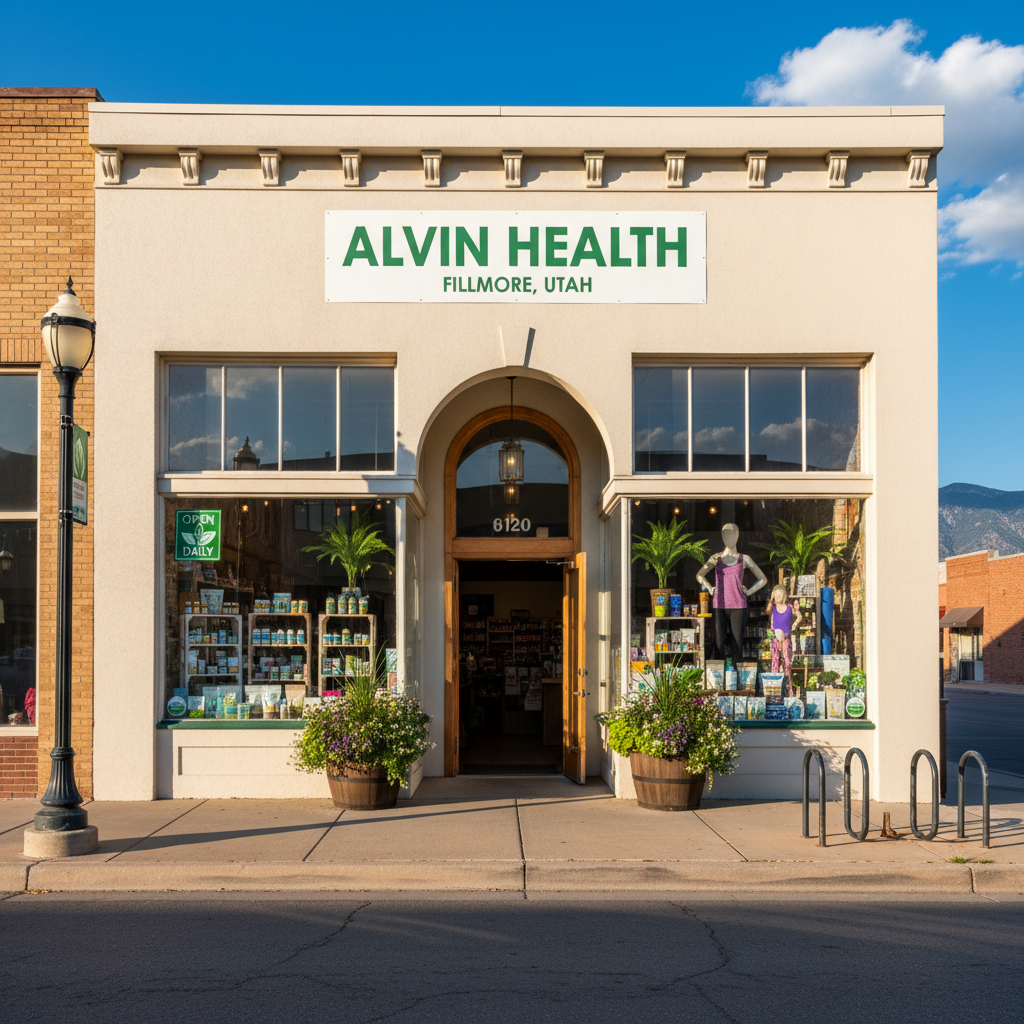
Personalization is the key to an effective winter wellness plan. We encourage local residents to visit Alvin Health for a consultation focused on their unique needs. Our store is designed to be a hub for practical nutrition guidance rather than just a retail shelf. We provide the expertise needed to navigate wellness resources and choose the quality vitamins and supplements that align with your lab results and lifestyle. By combining these environmental habits with a targeted nutritional protocol, you can protect your energy and immune resilience until the spring sun is high enough to resume its role in your health.